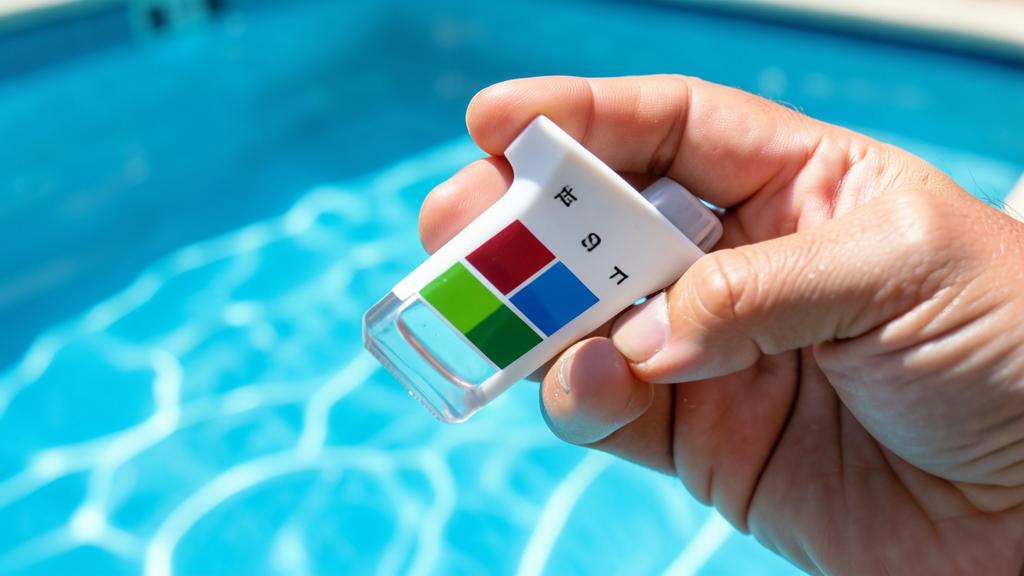
pH and chlorine in Spanish pools: what the numbers actually mean
Most pool owners know they need to test the water regularly, but fewer understand what the readings actually tell them — or why pH matters as much as chlorine. A plain-English explanation.
The two numbers that matter most
Pool water chemistry involves several parameters, but two govern almost everything: pH and free chlorine (or its proxy measurement, ORP).
pH measures how acidic or alkaline the water is, on a scale from 0 to 14. The ideal range for a swimming pool is 7.2 to 7.6. Below that range, the water becomes acidic — corrosive to pool surfaces and irritating to swimmers' eyes and skin. Above that range, the water becomes increasingly alkaline, which causes scale deposits and, critically, makes chlorine far less effective.
Free chlorine is the active disinfectant in the water. A reading between 1.0 and 3.0 parts per million is the standard target for most pools.
Why pH affects chlorine — and why this matters more than most people realise
Here is the thing that surprises most pool owners: chlorine's effectiveness is almost entirely dependent on pH. At pH 7.0, roughly 70% of chlorine in the water is in its active, disinfecting form. At pH 7.8 — still within what many people would consider an acceptable range — that drops to around 30%. At pH 8.0, less than 20% of your chlorine is doing anything useful.
This means a pool with perfectly adequate chlorine levels and slightly high pH can still fail to disinfect properly. You can be spending money on chlorine that is largely inactive.
In Spanish conditions, pH tends to drift upward. Sun and heat cause water to off-gas carbon dioxide, which raises pH. A pool sitting in direct Andalusian summer sun will typically see its pH rise faster than a shaded pool in northern Europe.
What ORP tells you
ORP stands for oxidation-reduction potential, measured in millivolts. Rather than measuring the quantity of chlorine in the water, ORP measures its activity — how much disinfecting work the chlorine is actually doing. A reading above 650 mV indicates effective disinfection. Below 600 mV, the water's disinfecting capacity is compromised regardless of what the chlorine reading says.
ORP is a more useful real-world measure than free chlorine concentration alone, because it captures the combined effect of chlorine level and pH together. A sensor measuring ORP gives you a direct answer to the question that actually matters: is this water safe to swim in right now?
Why manual testing has limits
Manual testing with a kit or test strips gives you an accurate reading at the moment you test. What it cannot tell you is what happened between tests. In a pool that is checked once a week, the reading on Friday tells you the state of the water on Friday — not what happened on Tuesday when there was a heavy bather load, or on Wednesday afternoon when a summer storm diluted the chemistry.
Continuous monitoring with a floating sensor gives you the full picture — every 15 to 30 minutes, all week, whether or not anyone is at the property. When a reading drifts out of range, an alert fires immediately rather than waiting for the next scheduled visit.
Senzo's pool sensor measures both pH and ORP continuously, alongside water temperature, and sends automatic alerts when any reading moves outside safe parameters.
More in Pool Monitoring
3 July 2026·Pool Monitoring
Green pool syndrome: causes, costs, and how to prevent it
A green pool is not just an eyesore. For a remotely managed holiday villa, it can mean lost bookings, difficult conversations with guests, and an emergency callout bill. Here is what causes it and how to stop it happening.
4 August 2026·Pool Monitoring
How often should a pool be tested? The case for continuous monitoring
Weekly testing is the standard for most managed pools. But a lot can change in seven days — particularly in the heat of a Spanish summer. Here is why the interval matters, and what continuous monitoring changes.
13 August 2026·Pool Monitoring
What is ORP and why does it matter more than chlorine levels alone?
Chlorine is the standard measure of pool safety. But ORP — oxidation-reduction potential — tells you something chlorine levels alone cannot. Here is a plain-English explanation of what it measures and why it matters.