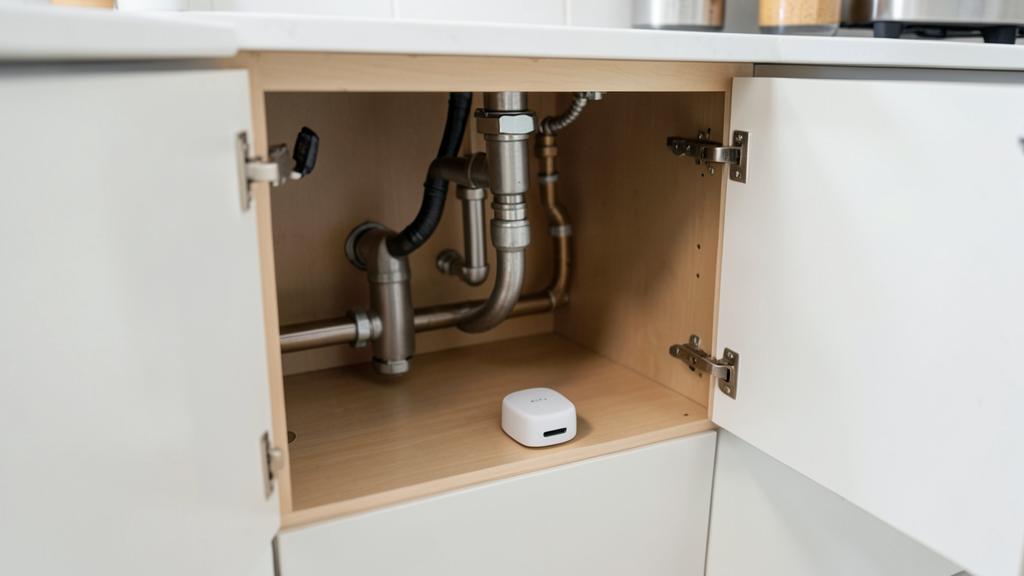
5 places every holiday home needs a water leak sensor
Not all leak sensors are equal, and not all locations are equally important. Here are the five places in a Spanish holiday property where a sensor is most likely to catch a problem before it becomes expensive.
1. Under the kitchen sink
The most common single source of domestic water damage. Kitchen sink flexible hose connections — the braided metal or plastic hoses connecting the taps to the supply — have a finite lifespan and fail without warning. A slow drip can go unnoticed for weeks in a property that is not regularly occupied. A sensor placed on the floor of the under-sink cabinet will detect moisture within minutes of a leak starting.
2. Behind or beneath the washing machine
Washing machine inlet hoses are under mains pressure every time the machine runs. They are also flexible and subject to vibration, which accelerates wear. A burst washing machine hose is one of the most destructive domestic leaks possible — water at mains pressure, delivered at high volume, until either the machine finishes its cycle or someone notices. In an empty property, that might be days. A sensor placed on the floor behind the machine catches any leak immediately.
3. The water heater cupboard
Electric water heaters (boilers) are standard in Spanish holiday apartments. They have a lifespan of around ten years and fail in several ways, most of which involve releasing water. The pressure relief valve — a safety device — can also open unexpectedly, releasing hot water onto the floor. A sensor in the water heater cupboard catches any discharge before it reaches the floor structure or the property below.
4. The bathroom floor near the toilet base
Toilet base seals — the wax or rubber seal between the toilet and the waste pipe — can fail gradually. The leak is typically small and intermittent, which means it saturates the subfloor slowly over weeks or months before becoming visible. It also creates ideal conditions for mould growth inside the floor structure. A sensor near the toilet base catches this early.
5. The terrace or utility room floor drain area
Many Spanish apartments have a terrace or utility room with a floor drain. If the drain becomes blocked or the terrace waterproofing fails, water can collect and begin to penetrate into the property structure or the ceiling of the property below. In a ground-floor or basement apartment, groundwater ingress during heavy rain is also a risk. A sensor in this area provides early warning of any accumulation.
What about the mains inlet?
An automatic shut-off valve fitted to the main water inlet pipe adds a second layer of protection: when a sensor detects moisture, the valve closes the mains supply automatically, stopping the leak at source. This is particularly valuable for high-flow scenarios — a burst hose or a failed boiler — where the volume of water released before a person can reach the property would otherwise cause significant damage.
Senzo's leak detection kits are designed for remote installation in holiday properties. Sensors require no WiFi and no fixed installation — they sit on the floor, run on long-life batteries, and report over their own mobile connection. An alert fires by SMS and email the moment moisture is detected.
More in Leak Detection
8 July 2026·Leak Detection
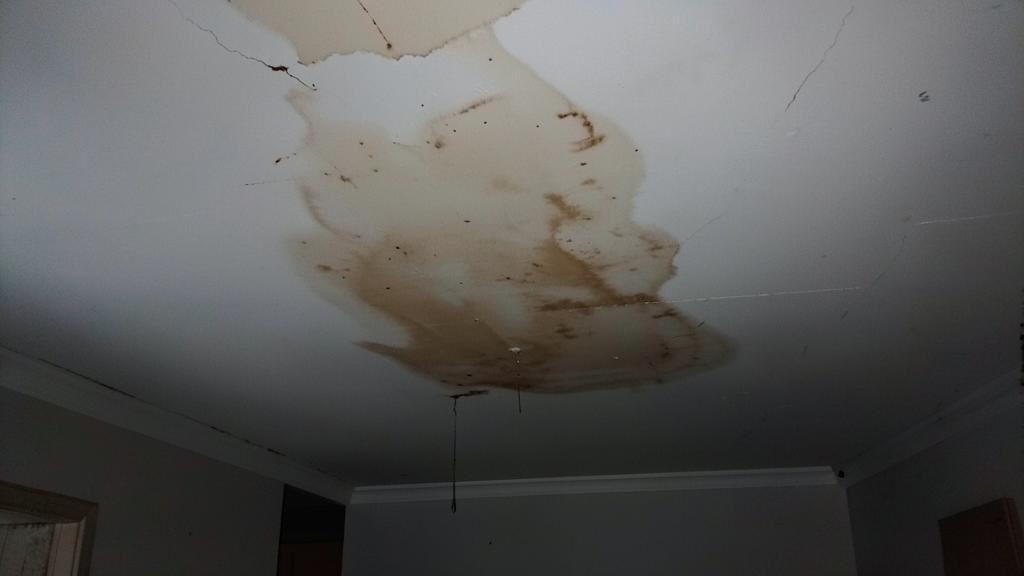
What happens when a water leak goes undetected in an empty property?
A small leak in an occupied home is noticed within hours. The same leak in an empty holiday apartment can run for days or weeks. The costs — structural, financial, and legal — can be severe. Here is what actually happens.
9 August 2026·Leak Detection
Water leak damage in Spanish properties: what your insurance actually covers
Property insurance in Spain covers water damage — but the details matter. Community policies, individual apartment policies, and the rules around negligence and notification can all affect a claim. Here is what you need to know.

2 September 2026·Leak Detection
How property managers on the Costa del Sol are reducing emergency callouts
Emergency callouts are one of the highest-cost, lowest-margin parts of property management. Remote monitoring is beginning to change how proactive managers handle them — and the numbers make a strong case.